
7 Signs You Have a Bunion and the Best Treatment Option
Health ArticlesFeb 09, 2021
Medical disclaimer: This article is for educational purposes and is not a substitute for professional medical advice, diagnosis, or treatment. If you have new or worsening foot pain, numbness, skin changes, or difficulty walking, seek care from a qualified clinician.
What Is a Bunion?
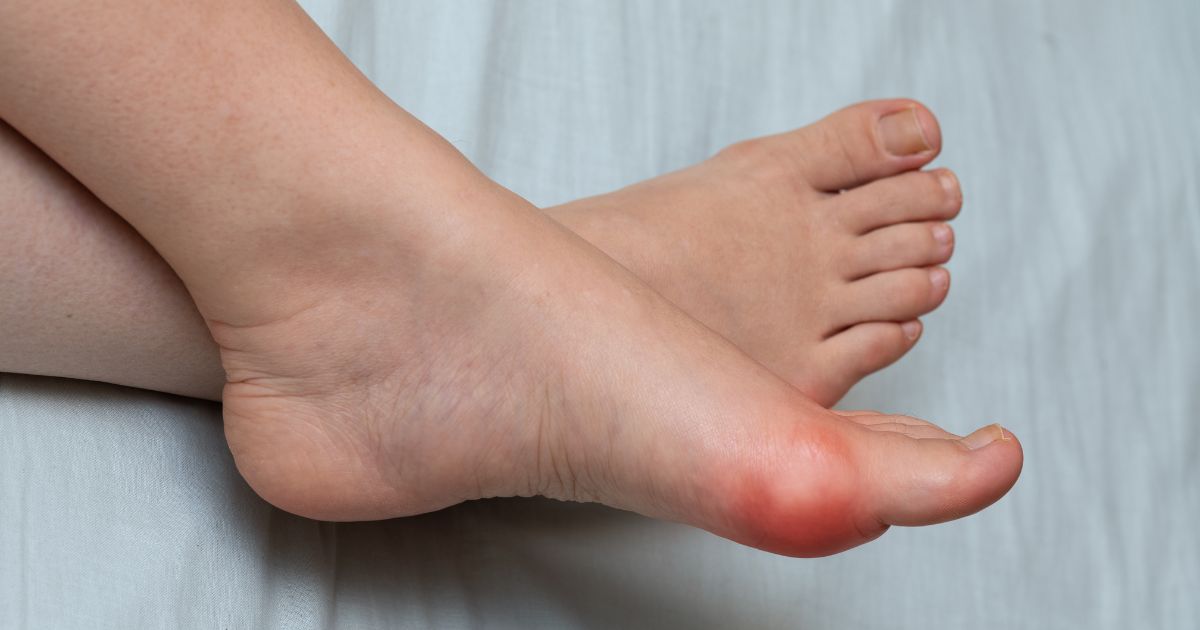
A bunion is a bony growth that develops at the base of the big toe joint on one or both big toes. As it forms, the bump pushes the bones of the big toe toward the other toes. Bunions deform the feet and usually cause discomfort and bunion pain.
How Bunions Are Diagnosed
- Most bunions are diagnosed with a physical examination because the signs are usually visible.
- Your doctor may request imaging, like an x-ray, to determine severity, assess big toe joint alignment, or rule out injuries.
- In some cases, blood work may be required to rule out arthritis.
7 Signs You May Have a Bunion
- Bony growth at the base of the big toe
- Inflammation and redness around the big toe
- Turning of the big toe toward the other toes
- Thickened skin on the big toe
- A callus forming on the second toe
- Foot pain
- Limited range of motion in the big toe
Are Bunions Limiting Your Activities and Lifestyle?
Bunions can be very painful—with each step, your entire body weight rests on that bunion. A common misconception is that a bunion can simply be “shaved off.” In reality, bunions are complex deformities caused by an unstable big toe joint. While non-surgical options like shoe inserts and soaking in warm water can ease pain, they do not fix the bunion at its root cause.
When to See a Foot & Ankle Specialist
- Pain that limits walking, work, or exercise
- Rapidly worsening deformity or difficulty fitting into shoes
- Skin breakdown, sores, or signs of infection (warmth, spreading redness, drainage)
- Numbness, tingling, or diabetes/poor circulation with any new foot symptoms
Lapiplasty® 3D Bunion Correction: A Modern Approach
Now, there’s a patented treatment for bunion correction—Lapiplasty® 3D Bunion Correction. Dr. Paul Maloof is offering this exciting, new treatment option, which does more than simply remove “the bump.” This 3D correction addresses your bunion in three dimensions to correct the root of the problem. Advanced fixation technology is used to secure the correction in place, allowing patients to walk within days of surgery.
Traditional Surgery vs. Lapiplasty®
- Traditional bunion surgery often uses a two-dimensional (2D) “cut and shift” approach—cutting the bone in half and pushing the top part over to reduce the bump’s appearance. This primarily addresses symptoms, not the root cause (the unstable foundational joint), making the bunion more likely to return to some degree.
- The patented Lapiplasty® Procedure uses specially designed instrumentation to rotate the entire deviated bone back into its normal anatomical position, naturally straightening the toe and removing the “bump” and associated pain. Innovative titanium plating technology permanently secures the unstable foundation—the root of the bunion problem. Most patients are able to walk within days of surgery. No cast is required, which helps patients return to their preferred footwear and activities quickly.
Frequently Asked Questions
What is a bunion and why does it cause a visible “bump”?
A bunion is a bony growth at the base of the big toe joint. As it develops, it pushes the big toe toward the other toes, deforming the foot and creating a prominent bump that often becomes painful. The root problem is an unstable big toe joint, not just excess bone.
How do doctors diagnose a bunion?
Most bunions are diagnosed with a physical exam because the signs are usually visible. Your doctor may order an x-ray to assess severity, joint alignment, or rule out injuries. In some cases, blood work is used to rule out arthritis.
Will soaking my foot or using inserts fix my bunion? Can the bump just be shaved off?
Non-surgical options like shoe inserts and warm-water soaks can ease pain, but they don’t correct the underlying deformity. Simply “shaving off” the bump is a misconception; because bunions stem from an unstable joint, symptom-only approaches don’t address the root cause.
How is Lapiplasty® 3D Bunion Correction different from traditional surgery?
Traditional 2D “cut-and-shift” surgery trims and shifts part of the bone to reduce the bump’s appearance, often leaving the unstable joint unaddressed. The patented Lapiplasty® procedure rotates the entire deviated bone back into its natural position and uses titanium plating to secure the unstable foundation—the root problem. Most patients can walk within days, no cast is required, and they typically return to preferred footwear and activities sooner. Learn more: See How It Works or schedule with Dr. Paul Maloof.
Sources (Clinical References)
