
What is a Distal Biceps Rupture?
Health ArticlesApr 01, 2021
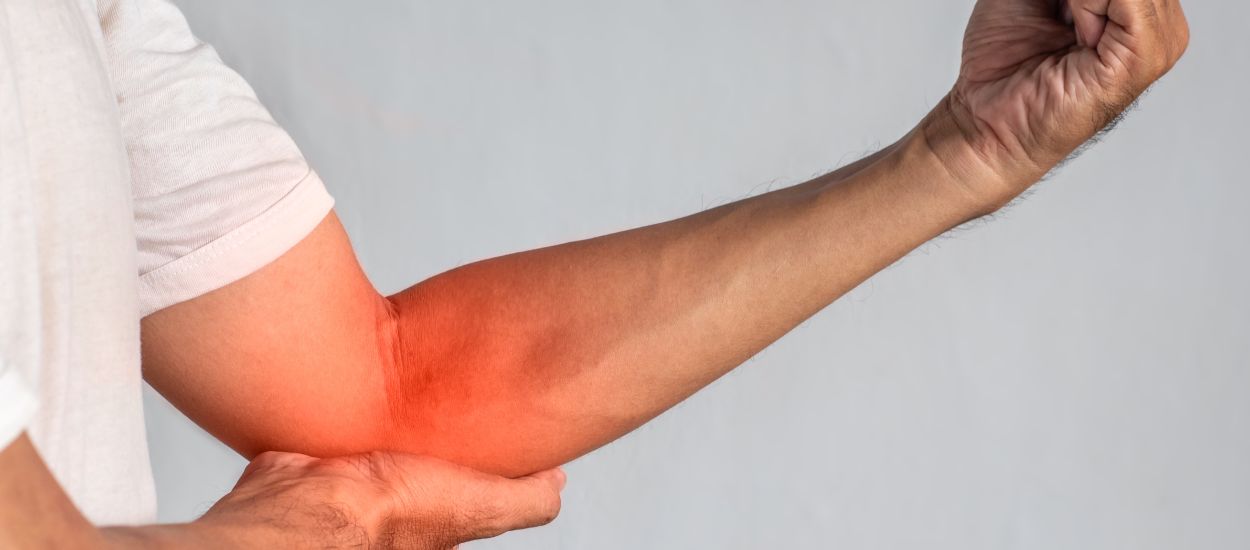
A distal biceps tendon rupture, also known as a distal biceps tendon tear, is a serious injury where the tendon fully detaches from where it connects to the bone in the forearm. The biceps muscle, which is located at the front of your arm, has two attachment points: one near your shoulder on the humerus bone and another just below your elbow on the radius bone. When someone experiences a distal biceps rupture, the part of the tendon that attaches below the elbow fails, causing the muscle to pull away from the bone in the forearm.
Partial Versus Complete Rupture
Sometimes, only a part of the tendon may tear. This is called a partial tear, meaning some of the tendon is still attached to the radius bone. Even though a partial tear is less severe, both types—partial and complete ruptures—often need surgery to restore full strength and function in the arm. However, if someone is older, less active, or can tolerate the loss of strength, they may choose to avoid surgery. It’s essential to get a check-up quickly if the injury is a complete rupture.
Causes
Distal biceps ruptures often happen when someone forcefully straightens their elbow against heavy resistance, like when trying to lift something really heavy. When a person tries to bend their arm or keep it bent against weight, the stress on the tendon increases until it tears away from the bone.
Symptoms
- People usually feel a popping sensation in their elbow when this injury occurs.
- Pain and swelling will often develop in the area where the injury happened.
- There may also be visible bruising around the elbow and the forearm.
- Weakness and limited movement in the arm are common.
- Additionally, there may be a bulge in the upper part of the arm where the bicep muscle has pulled up, and you might be able to feel a gap near the elbow where the tendon used to connect.
Treatment
While there are non-surgical options, most people will need surgery to fully regain strength and function, especially if the rupture is complete. It’s crucial to see a surgeon as soon as possible after the injury, as waiting can make it harder to treat.
In surgery, the doctor usually makes a small cut over the tendon’s attachment site, places a strong anchor into the radius bone, and reattaches the tendon with stitches. After surgery, rehabilitation follows, where the patient will gradually use their arm more, guided by a physical therapist.
If you think you might have a distal biceps rupture or a distal biceps tendon tear, it's important to make an appointment with a sports medicine surgeon right away.
If you’re experiencing symptoms of a distal biceps rupture or have recently injured your arm, don’t wait—call (757) 827-2480 to schedule your evaluation or conveniently request an appointment using the button below to get expert orthopedic care.
Health note: This article is for general education and is not a medical diagnosis. If you experience a sudden “pop” in the front of your elbow, significant arm weakness (especially when bending your elbow or turning your palm upward), noticeable bruising or swelling, a change in the shape of your arm, or difficulty using your arm after an injury—seek medical care right away.
Q&A
Question: What is a distal biceps rupture?
Answer: It’s when the biceps tendon completely tears away from where it attaches on the radius bone, just below the elbow crease.
Question: What usually causes a distal biceps rupture?
Answer: It often occurs when the elbow is forcefully straightened against heavy resistance, like trying to lift something heavy while bending the arm. The stress on the tendon can cause it to tear.
Question: What are the common signs and symptoms?
Answer: Many people report feeling a "pop" in their elbow, followed by pain and swelling. Bruising on the elbow and forearm is typical, along with weakness, limited movement, and a noticeable bulge higher up in the arm where the biceps muscle retracts.
Question: Do partial tears always need surgery? Who might consider non-surgical care?
Answer: Both partial and complete tears often require surgery for full recovery. However, older or less active people, or anyone okay with losing some strength, might consider non-surgical options. Getting evaluated quickly is especially important for complete ruptures.
Question: How is a distal biceps rupture treated, and what does recovery involve?
Answer: If surgery is necessary, the surgeon makes a small incision over the tendon’s attachment site, places an anchor in the radius bone, and stitches the tendon back in place. A recovery program helps patients gradually start using their arm again with help from a physical therapist.
Sources:
- American Academy of Orthopaedic Surgeons (AAOS): Biceps Tendon Tear at the Elbow – OrthoInfo (AAOS)
- Hospital for Special Surgery (HSS): Distal Biceps Tendon Tear
