

Benefits of Robotic Assisted Knee Surgery
Health ArticlesAug 19, 2026
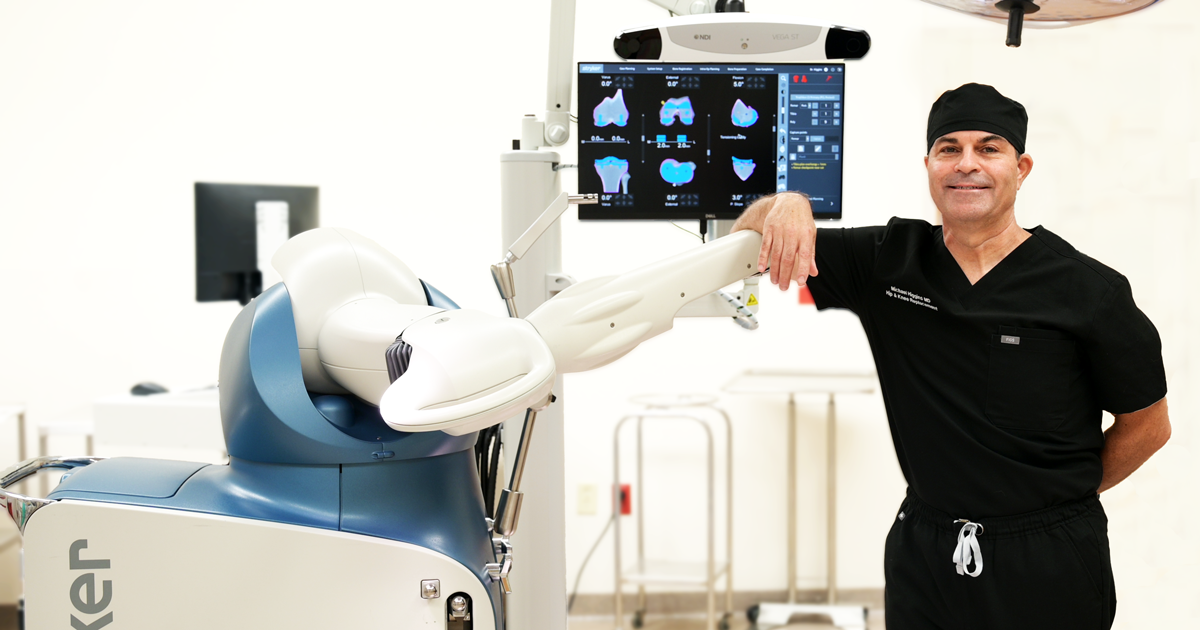
Advanced knee arthritis and other degenerative knee conditions can make everyday activities—such as walking, climbing stairs, or sleeping through the night—extremely difficult. When non-surgical treatments like exercise, physical therapy, weight management, bracing, and medications no longer provide relief, your orthopedic surgeon may recommend knee replacement. One increasingly common option is robotic assisted knee surgery.
What is robotic assisted knee surgery?
In robotic assisted knee replacement surgery, the surgeon remains fully in control of the operation. The “robot” is a sophisticated computer-guided system with a robotic arm that helps the surgeon plan, execute, and verify each step with a high degree of precision.
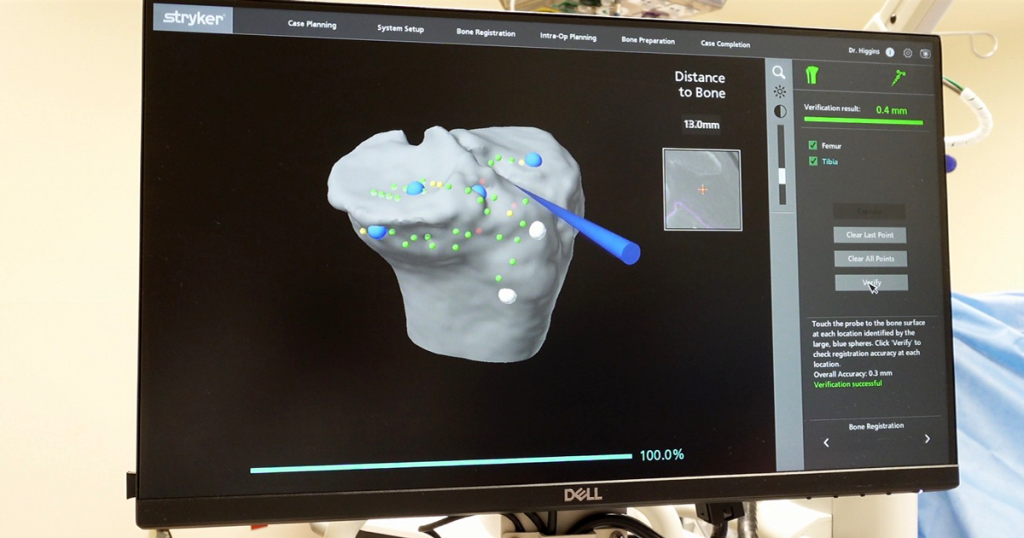
Many systems use advanced imaging—often a CT scan, depending on the platform—to create a detailed 3D model of your knee. Your surgeon uses this model to plan:
- Exactly where to remove damaged bone and cartilage
- The size and positioning of the implant components
- The ideal alignment of the new joint in relation to your leg
During the robotic knee replacement procedure, the system provides real-time feedback. Some platforms use haptic “guardrails” that limit the movement of the instruments to the pre-defined safe zone set by the surgeon, helping protect nearby ligaments and healthy bone.
Robotic knee surgery vs. traditional knee replacement
Traditional total knee replacement remains a highly successful operation with decades of data supporting its effectiveness. Robotic knee replacement builds on this success by adding computer-assisted planning and guidance. The goal is to improve accuracy and consistency in implant placement, which can influence how stable, smooth, and “natural” the joint feels.
However, outcomes still depend on multiple factors, including your overall health, the severity of your arthritis, your body weight and activity level, your surgeon’s expertise, and how closely you follow your rehabilitation program.
Key benefits of robotic assisted knee surgery
1. Highly precise planning and implant alignment
One of the major advantages of robotic knee surgery is the ability to plan your procedure in a very individualized way and then reproduce that plan accurately in the operating room. More precise implant alignment and sizing may help your knee move more smoothly, distribute forces more evenly, and support better long-term function.
2. Improved protection of healthy tissue (for many patients)
Because the robotic system helps the surgeon stay within the planned boundaries, it may reduce unnecessary removal of healthy bone and soft tissue in some cases. Less disruption around the joint can contribute to less swelling and discomfort in the early recovery phase and may help preserve more of your natural anatomy when appropriate.
3. Potential for less post-operative pain and faster early recovery
Some studies and patient reports suggest that robotic knee replacement surgery can be associated with reduced early pain and a quicker return to basic activities, especially when the technique allows for smaller incisions and more targeted bone cuts. While recovery still requires time and effort, the early trajectory may be smoother for many individuals.
4. Options for both partial and total knee replacement
Robotic systems can be used in a range of procedures, including:
- Robotic partial knee surgery – for patients whose arthritis is limited to one compartment of the knee
- Robotic assisted total knee replacement – for patients with more widespread joint damage
When you qualify for a partial replacement, more of your natural bone and ligaments can be preserved. Many patients feel this can make the knee feel more natural during activities like walking, climbing stairs, or rising from a chair.
5. Data-guided decisions during surgery
During a robotic assisted knee replacement, the system can show how your knee moves as the surgeon adjusts implant position and checks ligament balance. This real-time information supports more informed, data-driven decisions in the operating room and can help the surgeon fine-tune your final alignment before closing the incision.
Who may be a good candidate?
You may be a candidate for robotic assisted knee surgery or robotic total joint replacement if you have:
- Moderate to severe osteoarthritis, inflammatory arthritis, or post‑traumatic arthritis
- Chronic knee pain that limits walking, climbing stairs, work, or sleep
- Symptoms that have not improved with nonsurgical treatments such as medications, injections, activity modification, and physical therapy
Your surgeon will also evaluate your leg alignment, bone quality, body mass index (BMI), overall medical conditions, and personal goals. Not every hospital has access to robotic platforms, and not every patient requires robotic technology to have an excellent outcome, but many patients are eligible for either a robotic assisted total knee replacement or a traditional approach.
What to expect: before, during, and after surgery
Before surgery
- Pre‑operative evaluation: This typically includes a physical exam, X‑rays, and, for many robotic systems, CT imaging for detailed surgical planning.
- Medical optimization: Your care team will review your heart, lungs, blood sugar control, and other conditions to reduce surgical risk.
- “Prehab” exercises: Strengthening your quadriceps, hamstrings, and hip muscles beforehand can make it easier to walk, climb stairs, and participate in physical therapy afterward.
During surgery
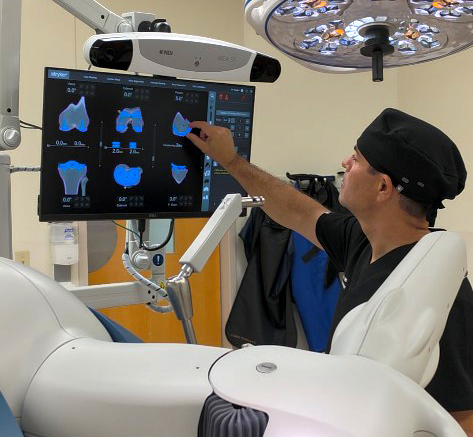
- The surgeon uses the robotic system to confirm key measurements, then guides the robotic arm to make bone cuts and place the implant components.
- The robot never operates independently; it functions as a precise tool under the surgeon’s direct control.
After surgery
- Early mobility: Many patients stand and take a few steps with assistance on the day of surgery or the following day, depending on their condition.
- Structured physical therapy: A supervised rehabilitation plan is essential to restore strength, flexibility, and range of motion.
- Home safety and support: Removing tripping hazards, installing handrails where needed, and arranging help with meals and chores can make recovery safer and more manageable.
Risks and limitations to consider
Robotic assistance does not eliminate the usual risks of knee replacement. Potential complications include infection, blood clots, stiffness, nerve or blood vessel injury, ongoing pain, implant loosening over time, and, in some cases, the need for revision surgery.
Other practical limitations include:
- Availability: Not all hospitals or surgery centers offer robotic platforms for robotic knee surgery.
- Insurance coverage and cost: Coverage for robotic assisted procedures varies by insurance plan; your surgeon’s office can help you understand your specific benefits.
- Learning curve and experience: Outcomes are influenced by the surgeon’s training and experience with the specific robotic system, as well as their overall volume of knee replacement surgeries.
Questions to ask your surgeon
- Do you recommend partial or total robotic knee replacement in my case, and why?
- How many robotic assisted knee replacement surgeries do you perform each year?
- What are the realistic expectations for pain relief, mobility, and activity level after surgery?
- How does my risk profile (age, weight, medical history) affect my potential outcomes?
- What should I watch for at home that might signal a complication, and whom should I contact?
Bottom line
For many people living with advanced knee arthritis, robotic-assisted knee replacement surgery offers precise, individualized planning and highly accurate implant placement compared with traditional techniques alone. These advantages can support joint stability, function, and a smoother early recovery, especially when combined with an experienced surgical team and a committed rehabilitation effort.
With more than 20 years of experience performing knee surgeries, Dr. Michael Higgins helps patients understand their treatment options and determine whether robotic-assisted knee replacement may be appropriate for their condition, lifestyle, and goals.
The best approach for you — robotic-assisted or conventional — depends on your anatomy, health status, symptoms, and the recommendations of your orthopedic surgeon. If you have questions about knee arthritis, knee replacement surgery, or whether robotic-assisted surgery may be right for you, contact Dr. Michael Higgins at Tidewater Orthopaedics to schedule an appointment.
Call (757) 827-2480 or click the link below to request an appointment.
Want to learn more about Dr. Higgins and Robotic Knee Replacement? Watch his video playlist on Youtube: Dr. Higgins Knee Replacement Videos
Sources
- American Academy of Orthopaedic Surgeons (AAOS) OrthoInfo – Total Knee Replacement: https://orthoinfo.aaos.org/en/treatment/total-knee-replacement/
- Journal of Arthroplasty - Image-Free Robotic-Assisted Total Knee Arthroplasty Results in Quicker Recovery but Equivalent One-Year Outcomes Compared to Conventional Total Knee Arthroplasty: https://www.arthroplastyjournal.org/article/S0883-5403%2823%2900131-6/fulltext
- Journal of Bone and Joint Surgery (JBJS) - Robotics-Assisted Knee Arthroplasty: https://www.jbjs.org/summary.php?id=344&native=1
- National Library of Medicine: https://pmc.ncbi.nlm.nih.gov/articles/PMC11212528/
- Cleveland Clinic – Knee Replacement (overview): https://my.clevelandclinic.org/health/treatments/8512-knee-replacement
