
Understanding the Causes of Top Foot Pain
Health ArticlesJul 10, 2026

That sharp, nagging ache on the top of your foot—the kind that makes you wince with every step—is an incredibly common problem. More often than not, the answer to "why does the top of my foot hurt?" is simpler than we think. The source of your foot pain when walking can frequently be traced back to everyday things, like lacing your running shoes too tightly or spending a long day in a stiff new pair.
This guide will walk you through the most likely culprits, from simple fixes to signs that mean it's time to see a doctor, giving you a clear path toward understanding and relief.
Is Your Footwear the Real Problem? The #1 Easiest Fix
Before worrying about complex injuries, take a hard look at your shoes. One of the most common causes of pain on the top of the foot is simple, direct pressure. Laces cinched too tight or a shoe made of stiff, unforgiving material can press down on the sensitive nerves and tendons that run along your foot, causing a persistent ache or sharp zing of pain.
For immediate relief, try this simple trick: re-lace your shoes. By skipping the set of eyelets directly over the most painful spot, you create a "window" that removes the pressure. This one change is often all it takes to calm the irritation. Many people searching for the best shoes for top of foot pain find that simply changing how they lace their current pair makes all the difference.

But if loosening your laces doesn't provide enough relief, and the pain feels more like a deeper ache when you flex your foot, it could be a sign of irritation in the underlying tissues.
That 'Frayed Rope' Feeling: Are You Dealing with Extensor Tendonitis?
A deeper ache often points to Extensor Tendonitis. The "extensor tendons" are the smooth, cord-like tissues on top of your foot that allow you to pull your toes up toward your shin, and "-itis" simply means inflammation. Put them together, and you have irritated tendons on the top of your foot.
Think of these tendons as ropes that have become frayed from rubbing against a rough edge. This friction leads to classic extensor tendonitis foot symptoms: a dull, persistent ache that worsens with activity. You'll likely feel this top of foot pain when walking or flexing your foot upwards.
This is almost always an overuse foot injury. If you’ve recently increased your running mileage too quickly, spent a day hiking steep hills, or worn shoes that are too tight, you may have asked too much of your tendons, too soon. The pain from tendonitis often feels like a general ache along the line of the tendons. But if your pain is a very specific, sharp point, it's time to consider another possibility.
When the Ache is a Deep, Pinpoint Pain: How to Spot a Potential Stress Fracture
Highly localized pain could be a sign of a stress fracture, a tiny crack that forms in a bone over time. Think of bending a paperclip back and forth—eventually, the repeated stress causes it to snap. The same can happen to the long bones in your foot (the metatarsals) from the constant pounding of running or long days of standing, leading to metatarsal pain causes that feel deep and sharp.
The key difference when comparing a foot stress fracture vs tendonitis is the pain's location. While tendonitis often feels like a broader ache, a stress fracture typically hurts in one specific spot that’s tender to the touch. You might also notice some localized swelling on top of foot without injury. The pain usually sharpens during activity and fades with rest—a classic tell-tale sign.

If you suspect a stress fracture, this is one pain you cannot "push through." Continuing to stress the bone can turn a small crack into a complete fracture, leading to a much longer recovery.
Could It Be Gout or a Pinched Nerve? Recognizing Less Common Pains
Sometimes, the source of pain isn't a stressed bone or an overworked tendon. A sudden, sharp pain on top of the foot that appears out of nowhere could be a flare-up of gout. This form of arthritis is famous for causing intense, burning pain, often making the skin over a joint look red, shiny, and hot. An attack of gout in the top of your foot can be excruciating.
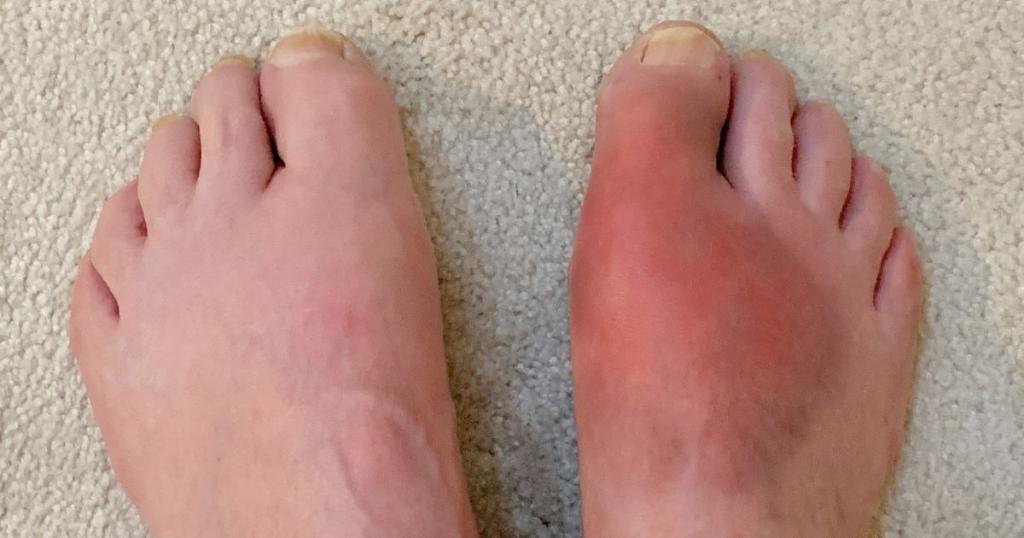
Another possibility is a pinched nerve. A nerve compressed by tight shoes or swollen tissue can send out confusing signals, explaining what nerve causes pain on top of the foot. The feeling is distinct from a dull ache. Lastly, you might notice a soft, movable lump, which could be a harmless fluid-filled sac called a ganglion cyst.
- Gout Pain: Feels intensely painful, hot, and swollen, usually at a joint.
- Nerve Pain: Feels like a burning, tingling, or shooting line of pain.
While these issues often require a doctor's diagnosis, simple at-home care can make a world of difference for more common causes.
Your At-Home First Aid: 3 Steps to Calm Top of Foot Pain Now
For many common strains and irritations, a simple first-aid routine can calm inflammation and provide relief. Here’s how to relieve dorsal foot pain quickly and safely at home:
- Rest Up: The most critical first step. Stop the activity causing the pain and try to stay off the foot as much as possible for a day or two.
- Ice It Down: Apply a cold pack wrapped in a thin towel for 15-20 minutes at a time, several times a day. This helps reduce swelling and dulls the ache.
- Stretch Gently: To perform one of the safest stretches for top of foot pain, sit and gently point your toes downward until you feel a light pull. Hold for 20 seconds; do not push into sharp pain.
These steps can work wonders for minor issues, but some symptoms shouldn't be ignored.
When to See a Doctor: The Red Flags You Shouldn't Ignore
Simple home care is a great first step for minor soreness, but your pain is a signal that deserves attention. Knowing when to seek professional medical advice is the most crucial part of taking care of yourself. It's time to see a doctor if you experience any of these red flags:
- Inability to walk or bear weight on the foot.
- Severe pain, swelling, or numbness that doesn't improve.
- A visible deformity or an open wound associated with the pain.
- Signs of infection, such as redness, warmth, and fever.
- Pain that worsens or persists despite several days of rest and home care.
By listening to your body, you can move from simply enduring the pain to actively participating in your recovery. Trust your judgment, try what you can at home, and don't hesitate to seek help when you need it. Taking the right step is the fastest way to feel better, confidently.
Don't Let Foot or Ankle Pain Slow You Down
Foot and ankle pain can interfere with every step of your day, but you don't have to live with discomfort or uncertainty. If your symptoms persist, worsen, or are keeping you from the activities you enjoy, it's time to get answers from a specialist.
Dr. Paul Maloof specializes in diagnosing and treating a wide range of foot and ankle conditions, helping patients find lasting relief and get back to moving confidently. Whether you're dealing with a recent injury or chronic pain that won't go away, expert care can make all the difference.
Schedule an appointment with Dr. Maloof at Tidewater Orthopaedics today by calling (757) 827-2480 or click on the link below. The sooner you address the problem, the sooner you can get back on your feet and back to living life without pain.
Frequently Asked Questions
Question: Could my shoes or laces really be causing the pain on top of my foot? How do I fix it?
Short answer: Yes. Tight laces or stiff uppers can press on the sensitive tendons and nerves on the top or side of your foot and create sharp or aching pain. Try “window lacing”: skip the eyelets directly over the sore spot so the lace doesn’t cross there, then continue lacing above and below as usual. Loosen the side eyelets if the pain is along the shoe’s collar. Many people get immediate relief with this simple change. If pain persists or feels like a deeper ache when you lift your foot or pull your toes up, the issue may be irritation in the underlying tissues rather than just surface pressure.
Question: What are the classic signs of extensor tendonitis on the top of the foot?
Short answer: Extensor tendonitis usually feels like a dull, persistent ache along the tendons that lift your toes, worse with walking or when you pull your toes toward your shin. It often follows an uptick in activity (like more running, steep hiking) or wearing shoes that are too tight. Think “frayed rope” from overuse and friction. The discomfort is more spread out along the tendon line, not in a single pinpoint.
Question: How can I tell the difference between tendonitis and a stress fracture?
Short answer: Location and behavior of the pain help you sort it out:
- Tendonitis: broader, line-like ache along the tendons; aggravated by activity and dorsiflexion; tied to recent overuse or tight footwear.
- Stress fracture: very localized, pinpoint tenderness over one spot on a bone (often a metatarsal); may show localized swelling; pain sharpens with activity and eases with rest. If you suspect a stress fracture, don’t “push through” it—ongoing stress can worsen the crack. Seek medical evaluation.
Question: Could sudden, intense top-of-foot pain be gout or a pinched nerve? How would I know?
Short answer: It could. Gout typically strikes suddenly with severe, burning pain at a joint, and the skin can look red, shiny, and feel hot. A pinched nerve tends to cause sharp, zinging, or burning pain, sometimes with tingling or numbness, and can be triggered by tight shoes or swelling. A soft, movable lump in the area may be a ganglion cyst (a benign, fluid-filled sac). Burning sensations are more common in the heel with nerve irritation than on the top of the foot.
Question: What can I do at home right now—and when should I see a doctor?
Short answer: Start with three steps:
- Rest: Pause painful activities and offload the foot for a day or two.
- Ice: 15–20 minutes on, several times daily (use a thin towel).
- Gentle stretch: Point toes downward to a light pull for ~20 seconds; avoid sharp pain.
See a doctor urgently if you can’t bear weight, have severe pain or swelling that isn’t improving, numbness, a visible deformity or open wound, signs of infection (redness, warmth, fever), or pain that worsens or persists despite several days of home care. Sudden heel pain without injury also warrants evaluation. If symptoms are limiting your activities or not improving, consider scheduling with a foot and ankle specialist like Dr. Maloof at (757) 827-2480.
Sources
- FootCareMD. “Foot and Ankle Conditions.” American Orthopaedic Foot & Ankle Society. URL: https://www.footcaremd.org/foot-and-ankle-conditions
- Mayo Clinic. “Foot Pain Causes.” Mayo Clinic, February 21, 2025. URL: https://www.mayoclinic.org/symptoms/foot-pain/basics/causes/sym-20050792
